Wednesday, 23 March 2016

Carina De Sa - Leopard

For my Research Methodology project I had chosen a Leopard, they are attractive elegant animals with have a great amount of strength and fierceness to them. The leopard appears in Shakespeare's play Richard II, page 175 "Lions make leopards tame,""yea, but not change his spots." A metaphor for someone who is incapable of changing their ways. From this I experimented ways in which I could portray their wild instinctive nature.

After having 'My Dog Sighs' present a lecture, he later did a workshop which consisted us going out and picking litter from the streets to then create our animals from it. I really enjoyed making the leopard in a 3 dimensional representative model, its fierceness is shown threw the opening of the box showing off the teeth, as if it were growling.


Here is one of my experiments where I played with the idea of having a 2D images in a 3D model.

For my final piece I continued having 2D images that made up the foreground, middle ground and background. I photographed the model and edited it using Photoshop to emphasis the 3 dimensional effect. I did this by adjusting the focus point and depth of field that blurs out what is in front of the camera and focusing on what is behind.

Tuesday, 22 March 2016

Megan Macdonald - Bat

Shakespeare's Animals
For our Research methodology project I chose to look at the bat, I've always been fascinated with them but have never had the chance to explore them in more detail. The bat features in Shakespeare's play Macbeth, act 4 scene 1, where the witches use it's wool as part of their infamous brew. Because of this I started to look further into the bats role within the supernatural world and why they are so frequently associated with the world of witchcraft and the occult.

Bubble bubble toil and trouble
Fire burn and cauldron bubble 
*
Eye of newt and toe of frog
Wool of bat and tongue of dog. 


Lino print of a bat's skeleton 

For my final piece I produced a lino print of the animals that the witches include in their gruesome brew.

Lino print of a bat's skull

Saffron Wain- Deer

This project was focused around animals within the theme of Shakespeare. I focused on deer because of the mythos and themes surrounding them and I was interested to know what kind of direction Shakespeare use them in.


I discovered that Shakespeares focus on deer was the hunting of stags, as that was a common sorting event of the time. However, the hunting lead to other themes, such as the pity one gets for the hunting of a deer; for example in Hamlet the line "let the stricken deer go weep" references the great pity that comes from a deer's tears.

Deer's tears were actually seen as quite powerful and to actually catch and kill a deer was a great feat. To see a deer shot was fascinating to women of the time and when a hunt had caught their prey it was tradition to cover your hands in the creatures blood (which is used by Shakespeare for reasons other than hunting). All these things come together to show a reverence for deer, an awe almost that is still carried on in modern times as seeing a deer much more rare; probably because they are hunted considerably less.


 This project was also a good way to research the anatomy and build of an animal, as before I had focused my studies on people. I used paper as a way to separate and analyse the body parts of a stag.


I also found it important to study into forested environments, and this was for two important reasons. One, obviously this is where deer live and are found so giving context to the animal was crucial. Secondly, this environment would not have changed since Shakespeare's time, so whether you see deer as rarely seen ethereal creatures or targets for a hunt, you'll be seeing them in the same surroundings that the people of Shakespeare's day did.


Shakespeare’s Animals.

Ruth Alderton 

Bears,bears,bears,in this unit its was all about bears. I had overheard that ‘the bears’ were the most frequently quoted animal in all of Shakespeare’s repertoire, however after a few hours of internet searches all i found was a stage direction ‘exited pursued the bear’ from the dark comedy ‘A Winters Tale’. A winters tales explores many themes of love, lust and most of all jealousy(to me) amongst many different characters .I began to look into the emotion jealousy as i suddenly realised how strange and powerful jealousy is. The part of the brain which makes us feel  jealousy is near to the part of the brain which makes us feel anger and arousal this maybe why we sometimes get confused and even fall into denial about how we feel. Anyway, it got me thinking that maybe i could personify this emotion by using the bear.

Lino cut Workshop

During this unit i also explored different types of mediums and really enjoyed Lino print and felt i understood the different techniques that i had never been bothered to try before,it was a good way of getting me out of my comfort zone. For my final piece I illustrated a range of characters from Shakespeare’s plays which are known for their jealousy with the characteristics of bear, using watercolours . I often used watercolours as they a great to blend with and i feel that they fit comfortably in with my style of drawing. I thought this was a interesting way to round up my project as it portrayed both the bear and what the bear represents in the appropriate setting.

- First stages of my final piece -  'A winters tale' (Leonte,Polixenes and Archidamus) 


                        Personifying a bear into 21st Century teen, drawn then edited on Photoshop  

Holly Seymour - Hummingbirds

For the Research Methodology I decided to look at Hummingbirds, within my work I wanted to depict it in a way to portray the animal in its naturally beautiful and intricate way. I used the quote from Shakespeare's play The Twelfth Night, Chapter 4 (Mistress Mary) "And, like a hummingbird, she flutters, a sparkling fleck, sportive and seemingly insouciant"


I experimented with printing as a technique for the project, Overall I made around 7 different lino and woodcut designs of Hummingbird also including a large square lino with a series of birds hovering together.


 As another experiment, I looked at mark making and creating pattern within the birds feathers and body.
For my sparkling fleck element in my project, I hand beaded this humming bird on a embroidery hoop, This is to reflect the iridescent look most hummingbirds have and wanted to capture that with this method.

Skye Jackson-Smith - Barn Owl


For the Research Methodology Unit, I decided to focus on the elusive Barn Owl.
I was drawn to studying the Barn Owl as I felt they tied in nicely with Shakespearian literature as owls have a reputation throughout the 15th & 16th century as being omens of death. 
I researched into the meaning/symbolism of the barn Owl in different cultures and they are mostly considered a sign of bad luck and quite frequently they are seen as a warning sign that someone is going to imminently die.
I found a reference to an Owl in Macbeth "It was the owl that shriek'd, the fatal bellman (2.2.5-6)" which supposedly relates to ringing of "the dead bells", which was a form of hand bell used in Scotland and northern England in conjunction with deaths and funerals up until the 19th century.
The owl is therefore referred to as the fatal bellman as it shrieked upon the murder of Duncan.

For my final piece I decided to design a Tarot cards to represent the fortune telling of the owl, I decorated them with silver & copper foil - one to represent night and the other to represent day.

Adam Davenport - Snake


Adam Davenport - Snake.

For my 'Shakespeare's Animals' project, I decided too choose the snake. The reason behind this choice was because of my knowledge of Shakespeare quotes that represent the snake in a vicious way. I started with research into the anatomy, environment, logos, artists that influence me and certain styles of snake designs. I went onto researching into Tattoo styled work on snakes, that went onto linking too symbolism as my main visual research. 

Whilst this research was going on, I was continuing with drawings of the snake that later on went onto being my final piece. I was drawing/experimenting in different styles that influenced me in my studies including ; Op Art, Tattoo, Symbolism, Continuous Line, Monochromatic, 3D Modelling and Pop Art. I will now show you some of the examples of my drawings, experiments and final piece.
Lino Print - Here I have one of five Lino prints
that came out the best. I chose to re-print these five
more times to sell in the end of year show. 
Photoshop Airbrush - This experiment was influenced through
my first initial drawing of the snake that I wanted to
develop further. However, this becomes a useful experiment
because the technique is used for the final piece.
Pop Art experiment - In the opening statement I mentioned
that I was drawing/experimenting in different styles. This
was a mixture of three; Pop Art, Monochromatic and Airbrush.
Final Piece - This piece was a development from my experiment
of Pop Art style, inspired by Andy Warhol. I then had a idea of the
snake biting into a can of drink, this drink was later called
'Snakebite'. 
My Dog Sighs - #FreeArtFriday. This was the experiment that I
chose to do during our workshop with My Dog Sighs.


Karen Li - Dragon

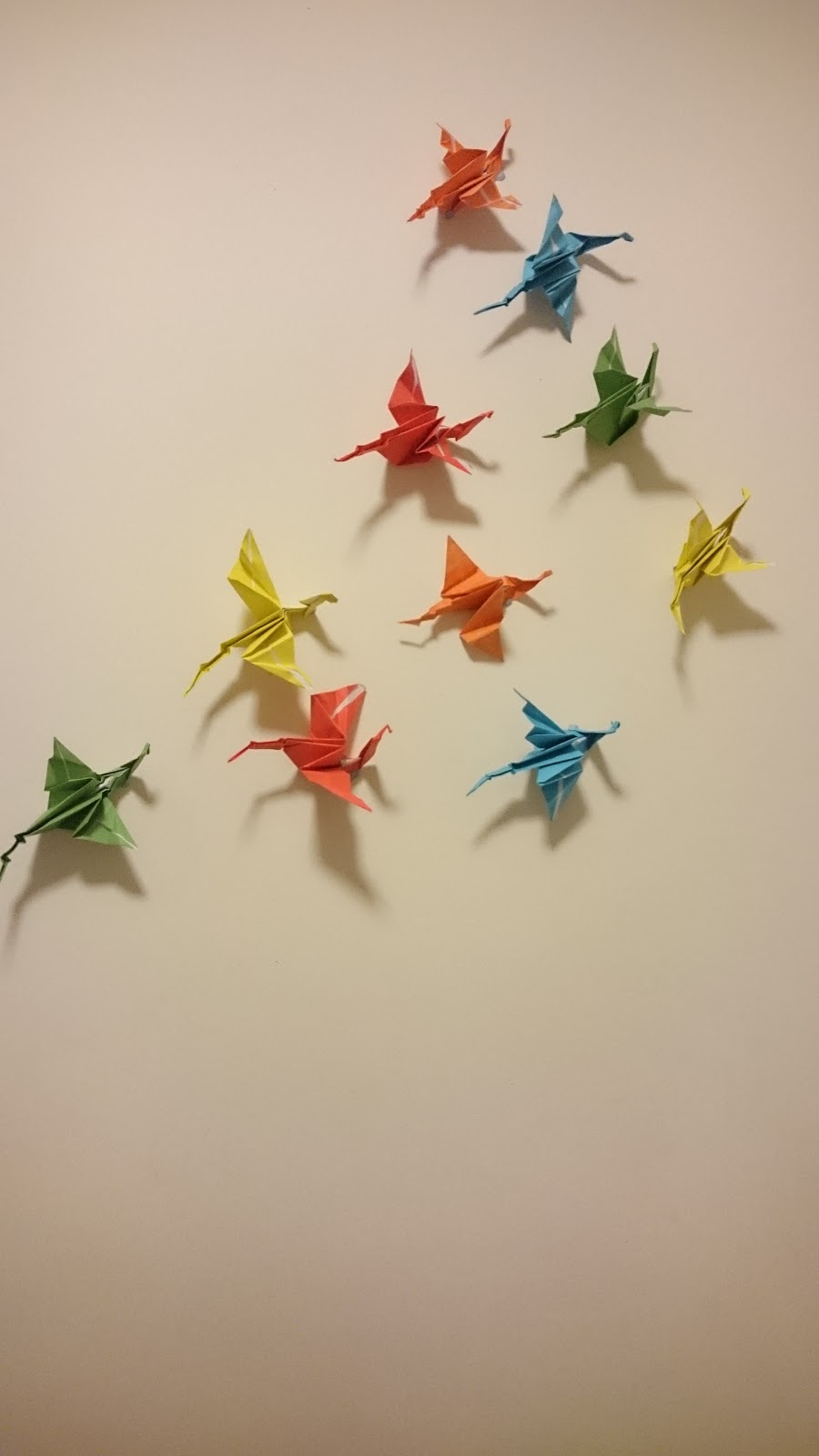
For my Research Methodology Project I decided to do it on Dragon, As they are very fierce and scary features recorded from myths and legends. I looked into the history of cultures stories of dragons, from this I found that origin of the legends of dragon emerged in the course of Chinese history. The Chinese believed that dragon was a benevolent creatures with powers to bring rain and good luck to the people.


In this project I experiment from wire modelling, origami dragons, Lino prints and 3D clay modelling. From those I found that my Lino prints came out very successful, which I decide to use my continuous line drawing made from my clay modelling into Lino as a little illustrated book.


Two pages of fold up book (Final Piece) 

Unicorn - Darcie Couch (784365)

                                         Unicorn - Darcie Couch (UP784365)


 Choosing an animal for this project proved difficult as many of the animals I had considered had a range of possibilities in regards to producing a final outcome. In the end I decided to study my project on a Unicorn because although finding primary resources would be difficult, I would have had a fluid approach to experimentation.


I began to work on the unicorns appearance, studying its poise and characteristics. As the Unicorn is a mythical animal it wasn't surprising to see that there were many varying illustrations/photos, showing different features in each; such as having wings or horns. These were initial studies I made using the references of what a Unicorn is described to look like. The varied mediums used and mark making explored what I felt would best successfully represent the Unicorn image.


I closely looked into comparing Horses and Unicorns. I made a study of a Horse using only white ink on brown paper. Making this study made it easier to compare the appearances of both animals, especially with their similarities in facial features.


Later on in the project I looked into more than the similarities and made both mathematical and scientific diagrams on their hooves, skulls and torsos. In the picture above I've included the hooves and shoes with their diagram labels and angular measurements. I found studying the contrast between the myth and the math fascinating because it dipped into key points of the broad projects spectrum.


Rats by AmberAtlantis

For my 'Shakespeare's animals' project I decided to focus upon the rat, as it's my favourite animal and they posses some interesting superstitious qualities, as well as similarities to the human body which are used for scientific study.

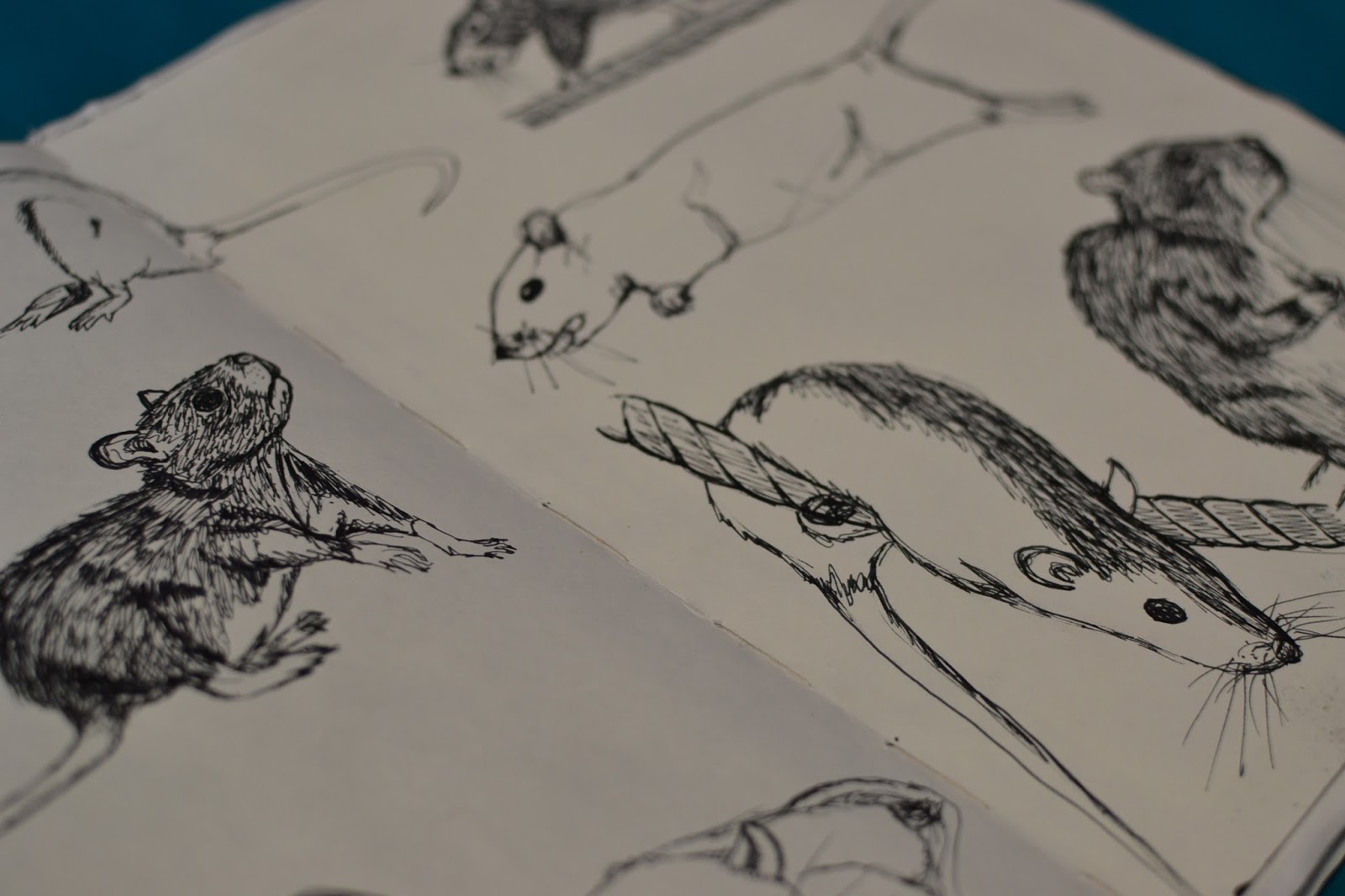
After conducting broad research into the animal such as their anatomy, behaviour, habitat and diet etc, I visited a large pet store and started producing lots of direct observational sketches. This is what helped me most in understanding their movement and behaviours. I also reviewed the texts in which rats are mentioned in Shakespeare's works, and I decided to centre my ideas around a scene in 'Tempest' where Prospero describes a boat that he fled to Italy on. This scene evolves around the superstition that rats leaving a ship in port indicates that the vessel will encounter misfortune at sea such as sinking.


With this idea in mind, I experimented with collage and 3D techniques which i could possibly use to illustrate the ship superstition, including wire sculptures wrapped in twine and wallpaper collages as shown above.

Eventually I settled for using paper mache to create the basic structure of the rat, and then I glued card triangles over this to create the fur. For my final piece I produced 2 rats; the card triangles on one were covered in ripped magazine, and the other was using a watercolour + salt technique to look like rust. Both of these symbolise neglect. 

I did some final research in rat euphemisms, where i came across the term 'rat king'. This is where rats live in an extremely cramped space, so eventually their tails become knotted together. I decided to join the tails of my two sculptures, but I did so by researching the types of knots used in sailing and made the tails out of rope to connote the boat superstition. I made the remaining features out of clay, and set the sculptures on a piece of driftwood which I found at the beach. My intention with this was to convey a narrative of the plank being a stray part of a recently sunken ship, and the rats had to escape together due to being connected at the tail. 


I thoroughly enjoyed this project and I look forward to seeing my work displayed in the Shakespeare's animals exhibition at Portsmouth Guildhall! Feel free to check out these links for some of my other art and photography work!

Lucy Page - Tiger

For the Shakespeare project I decided to research tigers as I find them really interesting and mysterious. The quotes from Shakespeare's work that inspired me were first 'The tiger was generally considered the personification of remorseless cruelty' and second 'Even the rudest and the most heraldic of a tiger must have had stripes not spots'. During my research I looked at how tigers hunt and especially how they pounce. I discovered that tigers are extremely powerful animals, the largest of the cat family and very distinctive due to their stripes. Because of this they are the perfect killing machine and I decided to run with this description for inspiration for my final outcome.

I was attempting to capture the powerful roar of a tiger with this drawing

I created a lino print from the first image and printed it successfully 

Stripes are one of the most identifying characteristics of a tiger, so I experimented with just painting the stripes 

I started looking at how tigers are killing machines, to show this I used cogs to create a half tiger half machine outcome
Final outcome: 
For my final piece I chose to use my drawing of a tiger crouching ready to pounce with cogs added to its upper leg muscles to show the pent up power in the muscles.


After the fire had gone out, I made a small phoenix and painted it in the traditional colours a phoenix would feature. I placed it behind the burnt wire as a symbol of the phoenix starting a new life. the reason why the phoenix can live forever as it was not tempted by Eve to eat fruit from the tree God forbid, therefore it was granted to live forever.

For my animal, I had chosen the phoenix because I wanted to choose a mythical animal to give myself more space to imagine what I could create.
At first I had tried to cover my phoenix wire model with hairspray and then set it on fire. However it didn't work at all due to the weather conditions, even though there was hardly any wind it was still difficult to set alight despite spraying a lot of hairspray onto the wire. But then I wrapped the wire with tissue and then set it alight with BBQ fluid.

After painting on BBQ fluid onto the wire phoenix model it set alight almost instantly and burned extremely well. I wanted to set my work on fire as this is the moment when the phoenix would be reborn, setting itself on fire from its old age. The phoenix was said to have lived for one thousand years before it would set itself alight.